
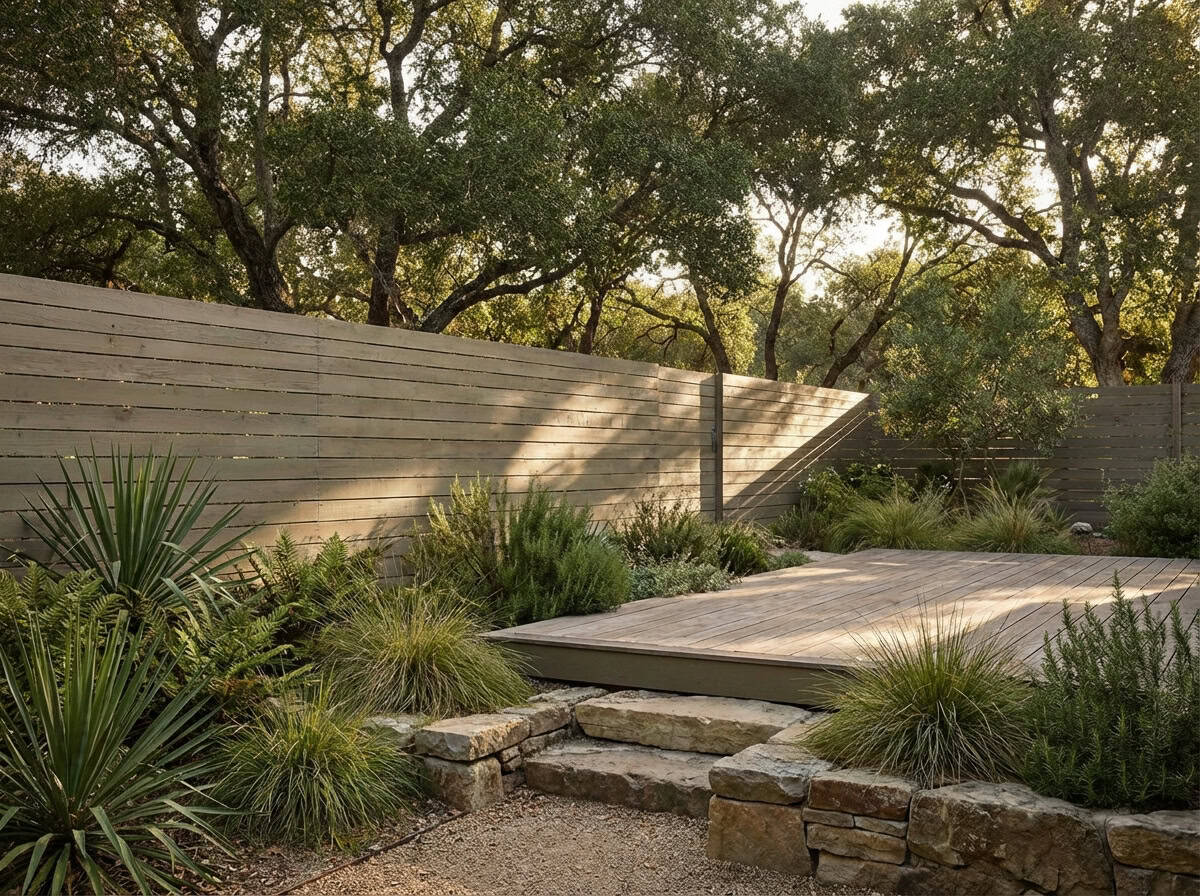
Winter is the ideal time to plan your outdoor living improvements. While you’re inside looking at your backyard, now’s the perfect opportunity to think about what changes will make your space work better for your family this year.
Here are eight trends we’re seeing Bay Area homeowners prioritize in 2026.
1. Sustainable Materials Take Center Stage
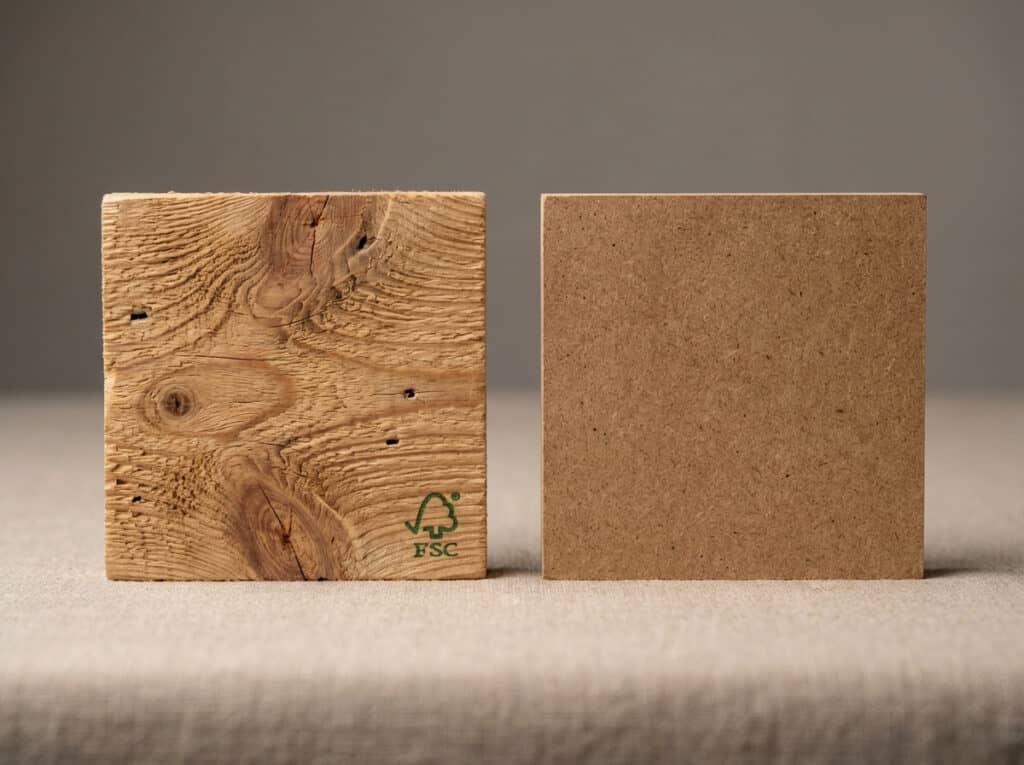
Sustainability is more important than ever to Bay Area homeowners. We’re seeing increased demand for FSC (Forest Stewardship Council) certified wood species, high-quality composite materials, and long-lasting alternatives that reduce environmental impact over time.
The focus isn’t just on eco-friendly sourcing. Homeowners want materials that won’t need replacing in five years, reducing waste and long-term costs.
ℹ️ What FSC Certification Means
FSC (Forest Stewardship Council) certification verifies that wood comes from responsibly managed forests. For Bay Area homeowners prioritizing sustainability, it’s one of the most reliable indicators that your materials support environmental stewardship.
2. Low-Maintenance Options Gain Ground
Traditional pressure-treated wood requires regular sealing, staining, and eventual replacement. Today’s alternatives offer better durability with less upkeep.
Thermally modified wood uses heat treatment (a process called pyrolysis) rather than chemicals to increase rot resistance. Wood-plastic composites (WPCs) blend real wood fiber with recycled thermoplastics, creating boards that won’t splinter, warp, or require annual maintenance.
For homeowners who’d rather enjoy their deck than maintain it, these options make sense.
💡 Heat vs. Chemicals
Thermally modified wood achieves rot resistance through heat treatment rather than chemical preservatives. The process changes the wood’s cellular structure, making it naturally resistant to decay without the toxicity concerns of traditional pressure-treated lumber.
3. Nature-Inspired Aesthetics
Earth tones and natural color palettes continue dominating outdoor design. The goal is creating spaces that feel like extensions of the landscape rather than interruptions to it.
This approach works particularly well in HOA-governed communities where design guidelines favor understated, harmonious aesthetics. Natural wood tones, muted stains, and organic shapes help outdoor structures blend with their surroundings.
4. Wellness Features Beyond the Hot Tub
The wellness trend has expanded beyond traditional hot tubs. Cold plunge tubs and “fire and ice circuits” (alternating between hot and cold water) reflect growing interest in temperature-based health benefits.
Dedicated relaxation zones, meditation spaces, and areas designed specifically for unwinding are becoming standard requests rather than luxury add-ons.
ℹ️ What’s a Fire and Ice Circuit?
This wellness practice alternates between hot water (hot tub or sauna) and cold water (plunge pool). Advocates cite benefits including improved circulation, reduced inflammation, and stress relief. It’s driving demand for outdoor spaces that can accommodate both hot and cold water features.
5. Privacy and Sound Management
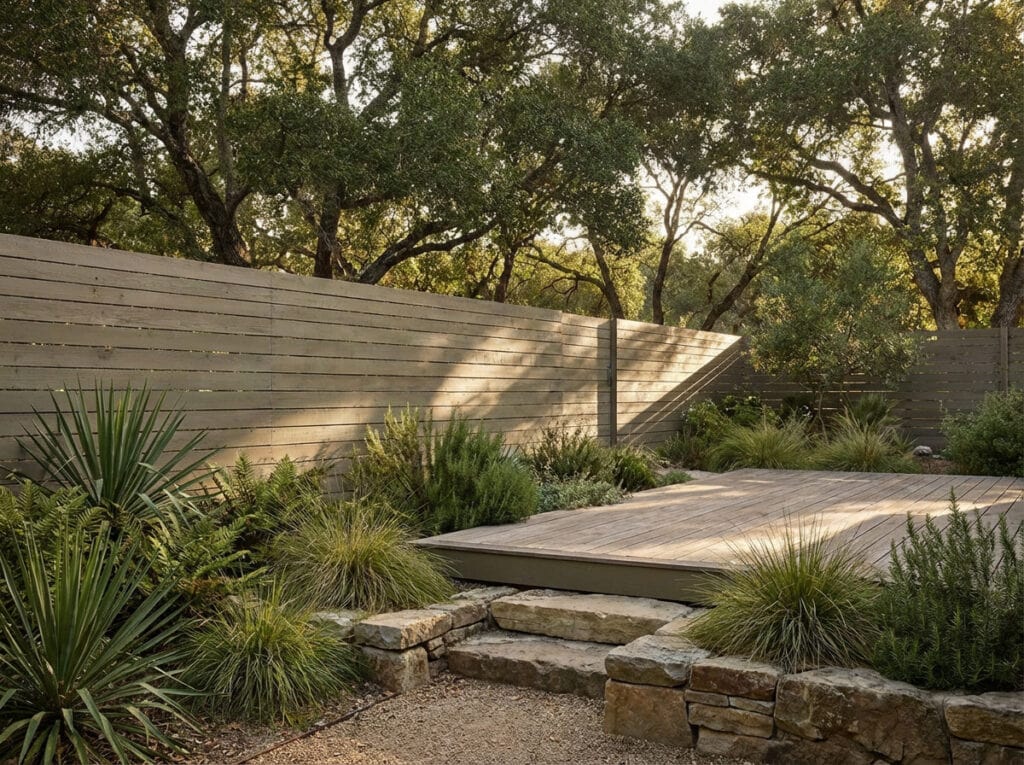
As Bay Area lot sizes shrink and density increases, privacy-focused fencing designs remain highly sought after. Board-on-board (good neighbor) fences, horizontal slat designs with minimal gaps, and strategic plantings help create secluded outdoor rooms.
Sound management is part of this conversation too. Solid fencing and strategic placement can reduce noise from neighbors and nearby streets.
6. Multipurpose Outdoor Zones
The pandemic permanently changed how we use outdoor spaces. Homeowners now expect their yards to accommodate multiple functions: remote work, outdoor dining, kids’ play areas, and adult relaxation.
This means designing with zones in mind. A deck might include a covered section for rain-protected work, an open area for dining, and a lower level for lounging. Fencing can define these zones while maintaining visual flow.
7. Fire-Safe Construction
For Bay Area homeowners, fire safety isn’t optional. Ember-resistant materials, non-combustible fencing options, and strategic placement support home hardening (making structures more fire-resistant) and Zone Zero protection.
Aluminum fencing provides a fire-safe alternative to wood in high-risk areas. When installed within Zone Zero (the 0-5 foot perimeter immediately surrounding structures), non-combustible materials can make the difference between a home that survives a wildfire and one that doesn’t.
⚠️ Zone Zero: The Critical 5 Feet
Zone Zero refers to the 0-5 foot area immediately surrounding your home. California’s defensible space regulations require non-combustible materials in this zone. Wood fencing attached to your house in a high-fire-risk area may not meet code or insurance requirements.
8. Smart Technology Integration
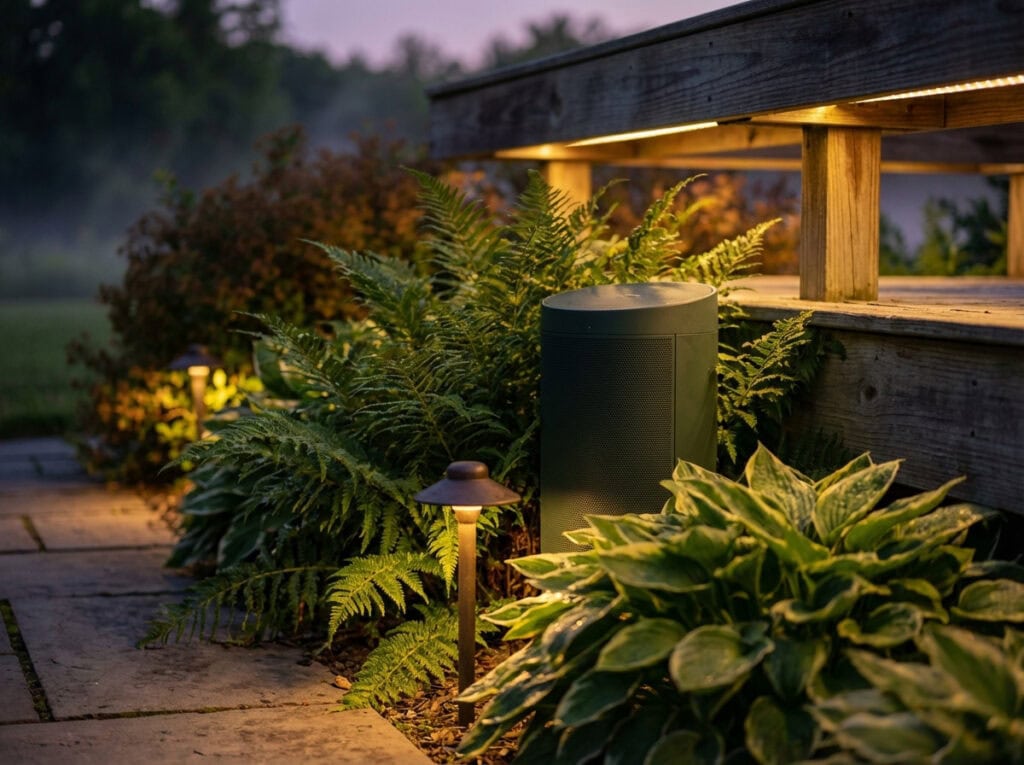
Integrated lighting, security cameras, and audiovisual systems are moving outdoors. Remote-controlled landscape lighting, app-managed irrigation, and weatherproof entertainment systems let homeowners control their outdoor spaces from anywhere.
The key is planning for these features during construction rather than retrofitting later. Running conduit and low-voltage wiring during deck or fence installation saves significant cost and disruption.
💡 Run Conduit During Construction
Even if you’re not ready for outdoor speakers or smart lighting today, have your contractor run conduit and low-voltage wiring during the build. Retrofitting later means tearing up finished work. A small investment now saves major disruption down the road.
Your Priorities Come First
Trends are useful for inspiration, but your needs and goals should always be the priority. A feature that’s perfect for your neighbor’s lifestyle might not fit yours.
The best outdoor projects start with honest conversations about how you actually use your space, what frustrates you about it now, and what would make it work better for your family.
⭐ Key Takeaway
Trends are inspiration, not requirements. The best outdoor projects start with how you actually use your space today and what would make it work better for your family. A feature that’s perfect for your neighbor might not fit your lifestyle at all.
🎯 Ready to Plan Your 2026 Project?
Winter is the perfect time to design your outdoor space before spring construction season. Let’s talk about your priorities and what would actually work for your family.