
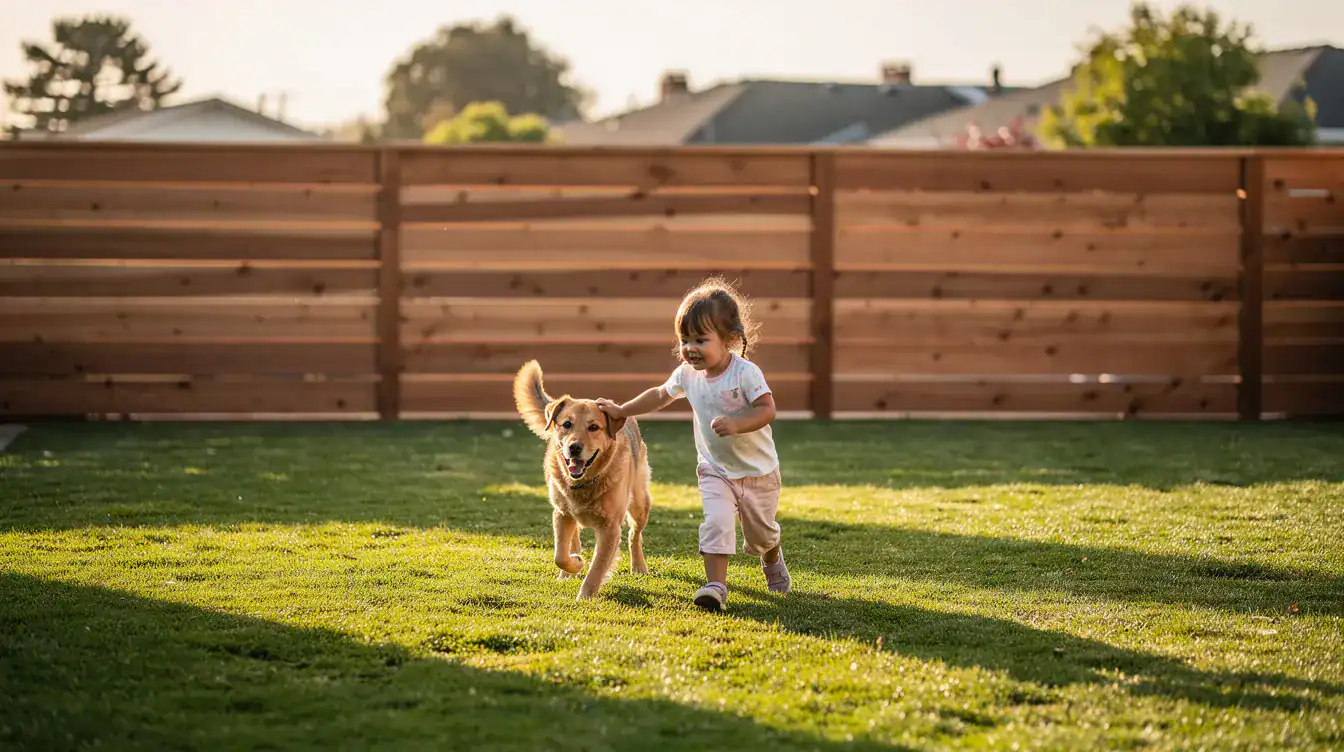
Designing a child and pet-proof fence is a wise move for any Bay Area property owner, even if you don’t have kids. The right fence protects your property and the children and pets next door, and it can add value if you plan to rent or sell the home down the road.
As with any fence, working with a local, licensed fencing company means it is built using the industry’s highest-quality materials, for durability and longevity.
7 Family and Pet-Friendly Fencing Design Tips for Bay Area Homeowners
Every fence should be customized for the property, the home, and the long-term goals, including safety and security for your family and the neighbors. A well-built and maintained fence should last 20 to 50 years depending on the materials, so the fence you build now may need to keep kids and pets safe decades from now.
Here are some things to consider before your fence installation.
1. Work with a licensed fencing contractor
Working with a licensed contractor means your fence is designed around your goals and built with skilled labor and high-quality materials. It also means:
- Bonded and insured work that protects your financial investment.
- Greater fence durability and longevity.
- Materials, work, and labor protected by warranties for a stated length of time. Using an unlicensed contractor, even a licensed landscape professional, can void your fencing materials’ manufacturer warranties.
- A fence safely and securely installed on sloped landscapes, no matter how steep.
A contractor’s experience is what lets you design a fence that keeps your children and pets safe for years to come.
2. Choose the right height
Height is one of the most important safety decisions. A fence built to secure kids and pets is typically at least four feet high. If the fence is meant to keep pets in, or to keep neighborhood dogs out, you may want to go higher, because some dog breeds can clear a six-foot fence without much trouble.
The goal is a fence that children and dogs cannot climb over or slip past. If your children are young, four feet is often enough to keep them within the property. Adventurous little ones are savvy, though, and treat climbing as a game, so a five- to six-foot fence may be the better call.
3. Take the fencing underground
Dogs and small children are excellent diggers. If they sense any chance to dig under the fence, they will try. Your neighbor’s dogs or kids may also find it exciting to dig under the shared fenceline to see what is on the other side.
We can install underground options that extend far enough below the fence line to deter diggers.
4. Minimize gaps or spaces
Homeowners often focus on avoiding gaps large enough for a pet or small child to escape, but small gaps pose their own risk. It is not uncommon for pets or children to get a head, arm, or leg stuck in a fence gap. That is a serious hazard, especially if they are alone and stuck for a while.
Choosing fence designs with minimal gaps, those too small to cause injury, is the best way to avoid this.
5. Use and maintain child and pet-safe fence materials
Some materials are safer than others for children and pets. Non-toxic materials are a priority, and craftsmanship matters just as much. Beyond styles and materials:
- Install gates and openings that close with secure, child and pet-proof latch or lock mechanisms, set at heights that are difficult for young children or clever pets to reach.
- Avoid “climbable” fence materials, especially around pools and other safety-sensitive areas.
Maintenance is just as essential for a safe outdoor space. The same signs that a fence needs repair also signal danger. Some of the biggest risks to children and animals are:
- Rusted nails or screws.
- Loose nails or screws that poke out of posts or boards.
- Split, broken, or missing boards, panels, or parts.
- Broken hinges or latch and lock mechanisms.
- Peeling or chipped paint.
- Sagging fence panels.
- Loose fence posts.
- Any other damage that could cause harm.
Seasonal fence inspections and maintenance are the best way to keep your fence secure and in top shape.
6. Use a buffer zone of shrubs and other landscaping
Along with adding visual interest to your yard, a buffer zone of shrubs and landscaping helps keep kids and pets from having direct access to the fence. Landscaping will not stop them entirely, but it makes it harder for children to get the foothold they need to climb, and harder for pets to jump.
7. Design a fireproof fence
The right materials play a critical role in fire hardening your property, and a fence built to slow wildfires also protects your children and pets. Fireproof fences use heat-resistant, non-combustible materials and designs that keep debris from getting trapped in the structure, where it can act as tinder. This matters most in the Zone Zero area closest to your home.
Best Fencing Materials for Homes With Children and Pets
Some of the best fencing designs and materials are:
- Solid designs that block sightlines to and from surrounding properties, which also improve privacy and soundproofing.
- See-through designs with protective measures in place where spaces or gaps could pose a threat.
- Wooden fences, a long-standing favorite for their classic look, design versatility, and longevity when properly sealed and maintained.
- Hybrid fences using wood frames and metal panels, increasingly popular for their contemporary look, fire-resistant properties, and lower maintenance.
- Metal fences that either provide privacy or keep an open feel for safety and views.
Hire a Bay Area Contractor With More Than 40 Years of Experience
To protect your children, pets, and property, you need a Bay Area contractor you can trust. Duce Construction Deck and Fence has decades of experience building custom fences, gates, and decks for families just like yours. Contact us to schedule an on-site consultation and discuss the best fence design for your goals.