
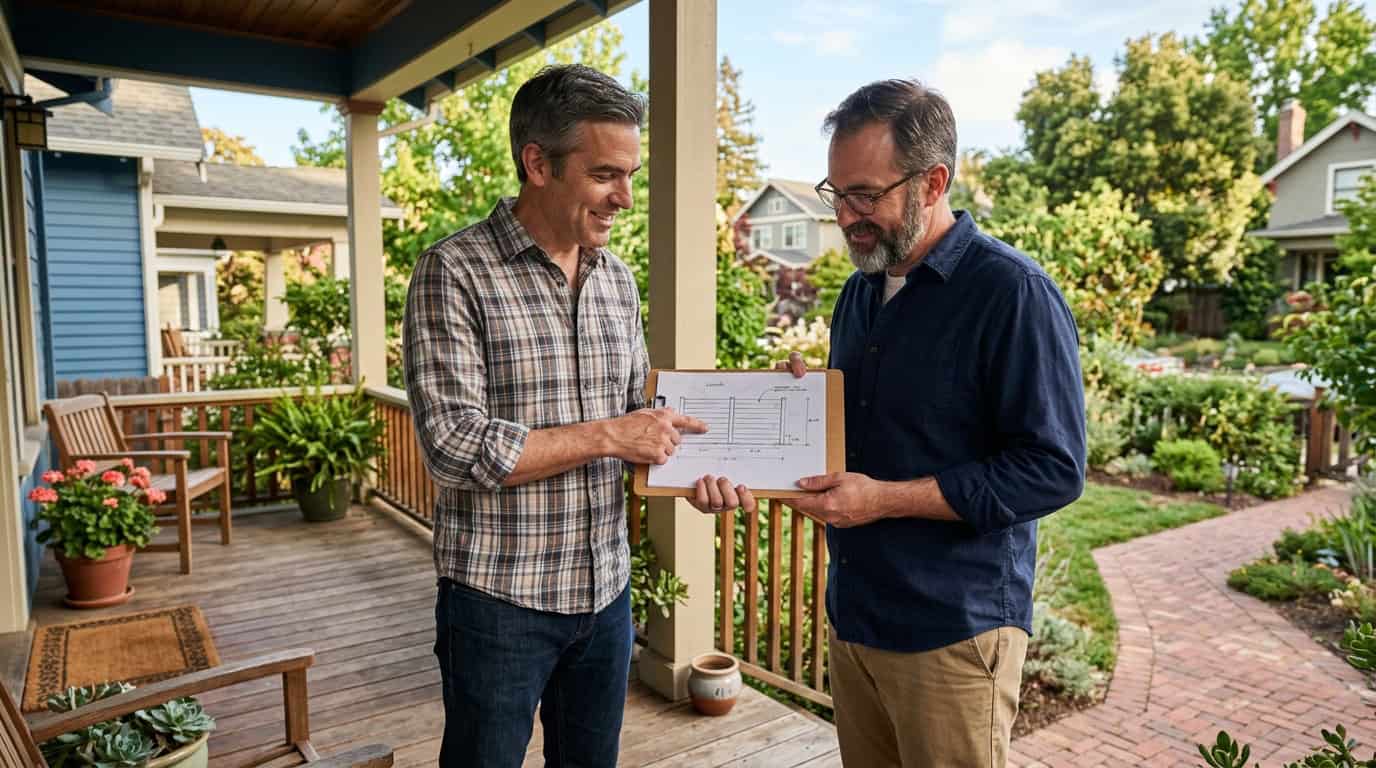
A new fence is exciting. You are picturing the privacy, the curb appeal, the dog that finally stops escaping. What you are probably not picturing is the awkward conversation with the neighbor whose side of the fence is about to look very different.
Here is the thing: you have to live next to this person long after the fence is built. The conversation you have before you break ground usually decides whether the project is a non-event or a three-month headache. After more than 40 years of building fences in the East Bay, we have watched the same pattern play out over and over. Homeowners who talk to their neighbor early almost always finish the project on good terms. Homeowners who wait, or avoid the conversation entirely, are the ones who end up arguing over a four-inch post hole.
This guide walks through how to have that conversation, what to bring, and what to do when the neighbor is not thrilled.
Have the Conversation Before You Need To
The biggest mistake we see is homeowners waiting until materials are stacked in the driveway. At that point, the neighbor feels ambushed, even if the project is entirely on your side of the property line.
A better sequence:
- Settle on your general plan. Style, height, rough timeline. You do not need every detail locked in.
- Knock on the door before installation is scheduled. A few weeks out is better than a few days.
- Bring something to show them. A photo of the style, a rough sketch, or the spec sheet from your contractor. Visual beats verbal every time.
- Lead with “I wanted to let you know,” not “Is it okay if…” If the fence is on your property, you are not asking permission. You are sharing information. That distinction matters.
Most neighbors appreciate a heads-up more than they care about the specifics. The ones who get upset are usually reacting to being kept in the dark, not to the fence itself.
What to Actually Tell Them
A good neighbor conversation covers four things:
- What you are building. Style, height, and materials. “We are putting up a six-foot board-on-board redwood fence” is clearer than “we are replacing the fence.”
- When it is happening. Give them a rough window. A week of notice lets them move planters, reposition sprinklers, or warn their dog walker.
- What your contractor will need. Brief access to their side of the fence line is almost always part of the job. Saying so up front prevents the “why is someone standing in my yard” moment.
- What stays the same. If the fence is going back on the same line, at the same height, on the same property boundary, say so. Half of neighbor anxiety comes from assuming the worst.
If you have a contractor’s spec sheet, a material sample, or a written timeline, offer it. Most people will say no, and they will appreciate that you offered.
When the Neighbor Pushes Back
Sometimes they will have an opinion. Some of it will be reasonable. Some of it will not. Here is how to think about the common ones:
“Can we make it taller, shorter, or a different style?” You can listen without agreeing. Sometimes their suggestion is actually better. Sometimes it is wildly outside what you want. Either way, do not commit on the spot. Say you will think about it and come back to them. That buys you time and signals respect.
“Who is paying for this?” If the fence is entirely on your property, you are. That is usually the answer. California law does allow for shared-cost arrangements on boundary fences, but those conversations go better when you are already in agreement on the design. If your neighbor wants to split the cost, that is often a win, not a problem.
“I do not want anyone digging on my side.” Your contractor should be able to work almost entirely from your side. Mention this. It removes the biggest practical objection most neighbors have.
“I liked the old fence.” This one is not really about the fence. It is about change. The best response is patience. Give them a few days to sit with the idea. Most people come around once they see you are being considerate and professional about it.
When a Neighbor Is Genuinely Difficult
Occasionally you get a neighbor who does not want the conversation, does not want the fence, and does not want to be reasoned with. When that happens:
- Document everything. Dates, conversations, what you offered. Not to start a fight, just so you have a record if things escalate.
- Keep your tone professional. Heated replies feel satisfying and always make things worse.
- Lean on your contractor. A licensed professional with decades of local experience can often explain the plan to a nervous neighbor in a way the homeowner cannot.
- Know when to pause. If a property line is genuinely in question, stop the project until a survey clears it up. A one-week delay is cheaper than a lawsuit.
If the conversation has already become a real disagreement about boundaries or legal rights, our separate guide on how to resolve property line fence disputes covers the legal side in detail.
A Good Contractor Makes This Easier
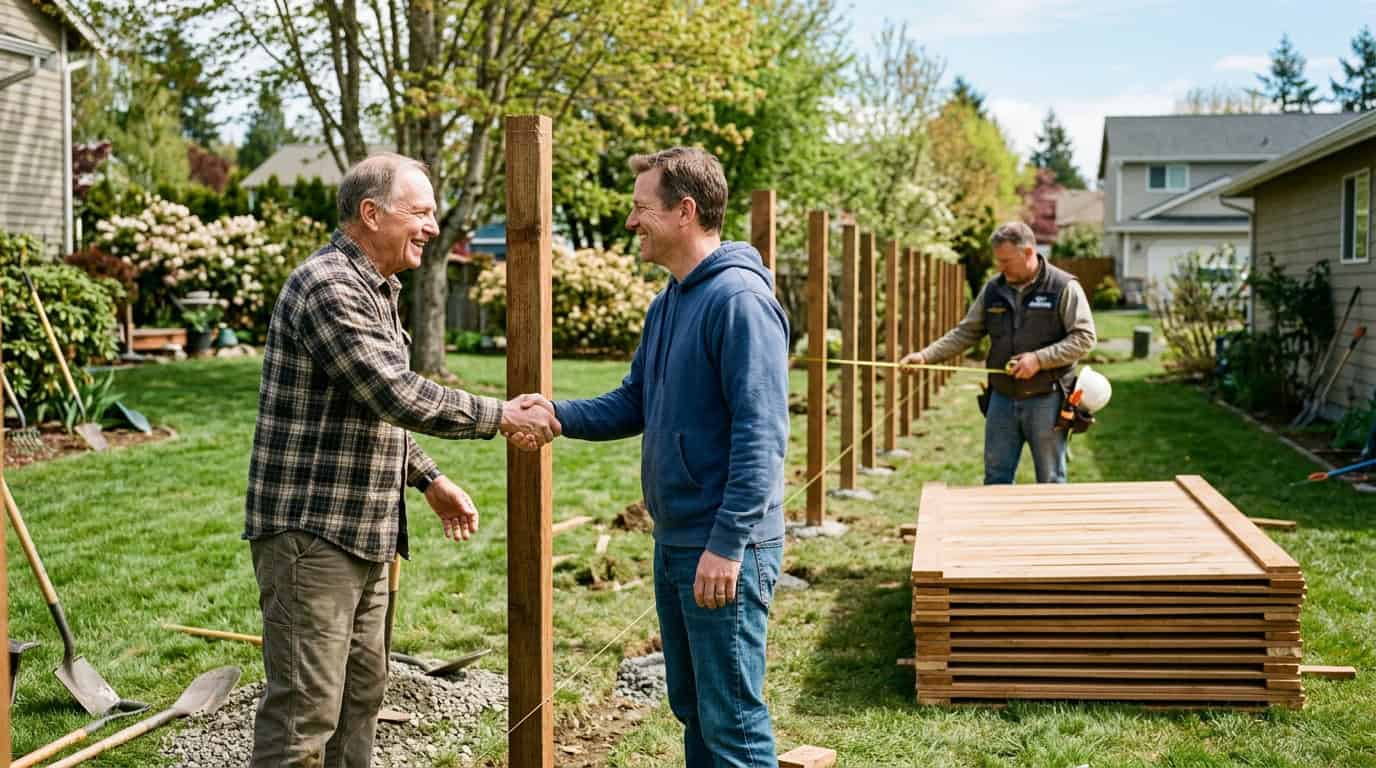
Half the “difficult neighbor” situations we see resolve themselves the moment a professional shows up, explains the plan, and answers the neighbor’s questions directly. A licensed fence contractor brings credibility, documentation, and a non-emotional voice to a situation that might otherwise be two homeowners stewing on opposite sides of a wood pile.
At Duce Construction Fence & Deck, we have been building fences in the Bay Area since 1983. We have handled every variety of neighbor conversation, from the friendly ones to the ones that required a site visit and a lot of patience. If you are planning a new fence and you are worried about how your neighbor is going to take it, give us a call. We can walk through your project, provide the documentation you need to share with them, and help the whole thing move forward as smoothly as possible.
Contact us at (925) 595-1020 to schedule your consultation.